Dental problems in rabbits: spurs, overgrown teeth, and abscesses
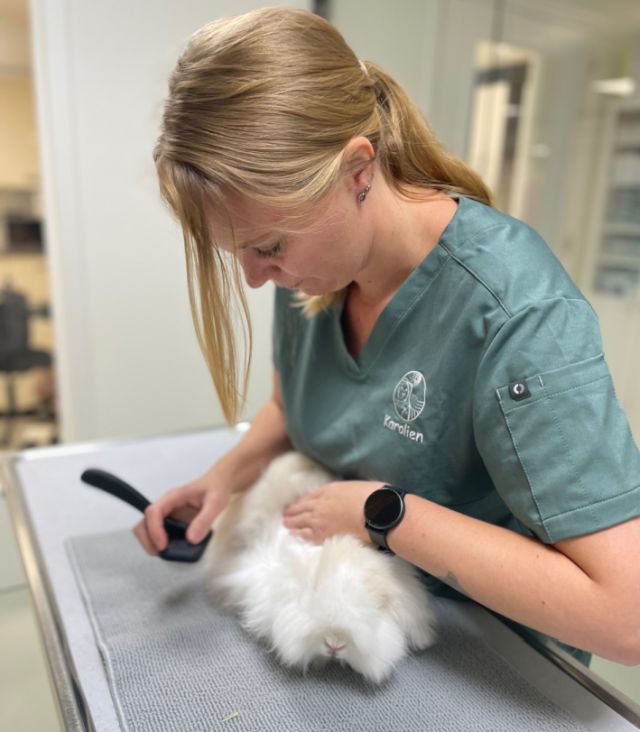
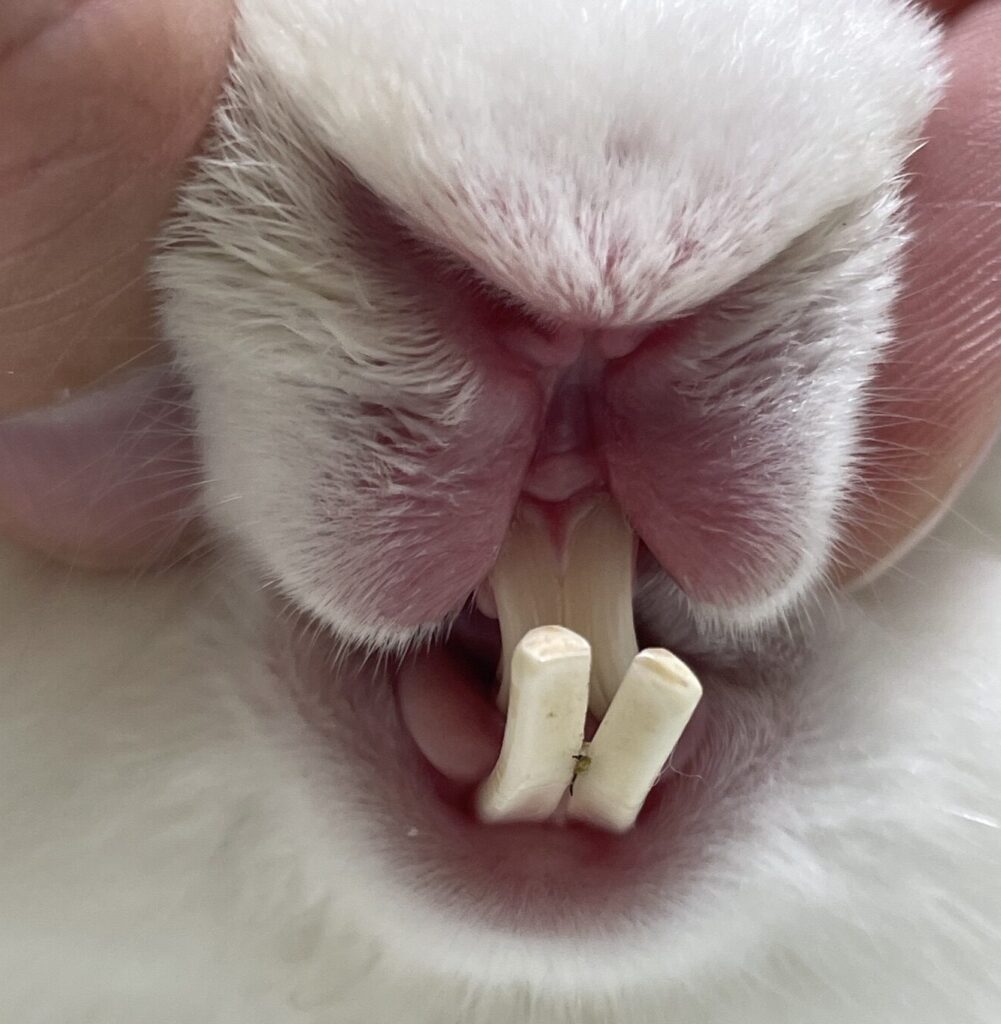
Rabbits have a unique set of teeth. Their incisors and molars continue to grow throughout their entire lives. Under normal circumstances, they are constantly worn down during eating and chewing. When teeth or molars do not align properly or wear down sufficiently, dental problems can arise. A rabbit with dental problems may experience pain, eat less, or even stop eating altogether. Sometimes problems are visible on the outside, for example, as a swelling near the jaw or cheek, or a wet chin. However, quite often, nothing is visible from the outside at all. In this article, we provide more information about common dental problems in rabbits, how to recognize them, and which treatments are available. How does a rabbit's dentition work? Both the incisors and the molars of a rabbit grow continuously throughout its life. Through eating and prolonged chewing, these are normally worn down constantly. Proper alignment of the teeth and molars is essential. When teeth or molars do not meet correctly, normal wear can be disrupted. This can cause teeth to become too long or lead to the development of sharp edges and spurs on the molars. It is not only the visible part of a tooth or molar that can cause problems. Abnormalities can also develop deeper in the jaw, around the roots of the molars (the reserve crown and the root area). A dental problem in a rabbit is therefore sometimes much more extensive than just an overgrown tooth or a sharp spur. How do you recognize dental problems in a rabbit?Rabbits do not always clearly show pain. For example, a rabbit may still be interested in food even though chewing is painful. Some rabbits may switch to eating only soft food or may stop eating hay, hard pellets, or certain pieces of vegetables. Possible symptoms of a dental problem include: eating less or stopping eating altogether selective eating dropping food from the mouth taking longer to eat fewer or smaller droppings weight loss drooling or a wet chin obvious or loud tooth grinding difficulty chewing a swelling near the jaw or cheek an unpleasant odor from the mouth changes in behavior or activity occasionally a watery eye or nasal discharge A rabbit that eats little or nothing must always be taken seriously. In addition to the pain that may be causing this, insufficient food intake in a rabbit can quickly lead to severely reduced intestinal function and further illness. Overgrown incisors in a rabbitA common dental problem is the development of overgrown incisors. This usually happens because the teeth do not align properly and therefore do not wear down sufficiently. The incisors can continue to grow longer, making it difficult for the rabbit to pick up and bite off food. In severe cases, the teeth can even grow into the lip, the palate, or other surrounding tissue. If the incisors are misaligned, we can sometimes correct them. When the problem recurs repeatedly or the alignment of the teeth is severely abnormal, extracting the affected incisors may be a better and permanent solution. Rabbits can generally function well without incisors. Sometimes the diet needs to be adjusted afterward, for example, by offering certain vegetables in smaller pieces. Can you clip a rabbit's teeth?Clipping rabbit teeth yourself is strongly discouraged. Using tools such as pliers can cause teeth to split or become damaged. Damage can extend deeper into the tooth and actually cause new problems. Furthermore, when incisors are overgrown, it is important to look at the underlying cause and not just the length of the teeth. Spurs on the molars in rabbitsA rabbit's molars also grow continuously. When wear does not occur properly, sharp edges or spurs can develop. These sharp points can prick the cheek or tongue and cause painful sores. As a result, a rabbit may have increasing difficulty eating. In the molars of the upper jaw, sharp edges often develop on the cheek side. In the molars of the lower jaw, they more frequently develop on the tongue side. Sometimes these abnormalities can cause significant damage to the mucous membrane or the tongue. A rabbit with molar problems may, for example, eat less or more selectively, have difficulty chewing, drool, develop a wet chin, lose weight, or produce fewer droppings. How are molar spurs treated? When sharp spurs or edges are present, we can correct them under (gas) anesthesia using special dental instruments. The aim is not only to remove the sharp point but also to restore the normal shape and function of the occlusal surface as much as possible. It is important to know that correcting a spur does not always eliminate the underlying cause. In some rabbits, abnormalities develop again over time. Regular dental check-ups and sometimes repeated treatments may then be necessary. Loose or abnormal molars in a rabbit Sometimes a molar is so abnormal, damaged, or inflamed that it becomes loose or no longer functions normally. This can be very painful and continue to irritate the surrounding tissue. When a molar is severely loose, chronically inflamed, or repeatedly causes problems, it may be necessary to extract it. Extracting a molar in a rabbit is a specialized treatment. Rabbit molars have a long reserve crown, are relatively fragile, and are located deep in the jaw. A molar must be removed as completely as possible without unnecessarily damaging surrounding structures. Therefore, we carefully assess which treatment is necessary and possible beforehand. At Dierenkliniek Zoo Bijzonder, we have years of experience with molar extractions and supplementary treatments. Tooth and jaw abscesses in rabbitsDental problems can also lead to infections and abscesses. A jaw abscess may be visible as a firm swelling near the jaw or cheek, but sometimes little is visible on the outside initially. An infection can develop around a tooth or molar or be located deeper within the jawbone. Abnormalities of the lower part of a tooth or molar can play a significant role in this. To assess exactly what is happening, X-rays of the teeth and skull may be necessary. These allow us to evaluate the teeth and molars, their positioning, and the surrounding jawbone. For more extensive or complex abnormalities, additional imaging may sometimes be required. The treatment of a tooth or jaw abscess depends on the cause, location, and extent of the infection. It is often important not only to treat the infection but also to address the underlying cause. For example, an affected tooth or molar may need to be removed, and infected or abnormal tissue must be treated. Effective pain relief and careful aftercare are essential. Depending on the situation, antibiotics may also be part of the treatment. Filing the teeth or extracting a tooth or molar?Not every dental problem in a rabbit is treated in the same way. For sharp spurs or abnormal chewing surfaces, filing (burring) can be an effective treatment. This removes painful sharp edges and aims to restore the normal shape and function of the dentition as much as possible. When a tooth or molar is severely abnormal, loose, damaged, or inflamed, extraction may be necessary. Especially when the same tooth or molar repeatedly causes problems, removal may ultimately be a better solution than repeated treatments. The most suitable treatment depends on the situation. We consider, among other things, the alignment and condition of the teeth and molars, any abnormalities deeper in the jaw, and the general health of the rabbit. How do we examine a rabbit's teeth?A complete dental examination in a conscious rabbit is difficult. In particular, the back molars can only be viewed to a limited extent without special equipment. During an initial examination, we can often already find indications of a dental problem. If we suspect an abnormality, an extensive examination under sedation or anesthesia may be necessary. This allows us to carefully evaluate the oral cavity, tongue, and all molars, and treat them immediately if necessary. If abnormalities deeper in the jaw are suspected, additional X-rays can be taken. These also allow us to discover problems that are not visible during an examination of the mouth itself. Can you prevent dental problems in rabbits? Unfortunately, not all dental problems can be prevented. Some rabbits, for example, naturally have misaligned teeth or molars. Previous damage or changes to the dentition can also cause problems again later. Proper nutrition is important for the most normal wear and function of the teeth. High-quality hay or grass should therefore form the basis of a rabbit's diet. Prolonged chewing on fiber-rich food ensures many chewing movements and contributes to normal dental wear. Pellet food can be part of the diet, but it does not replace the prolonged chewing required for hay or grass. In addition, regular dental check-ups can help detect abnormalities early. This is especially important for rabbits that have had dental problems before. When should you take your rabbit to the vet?Does your rabbit have difficulty eating, is it eating less or more selectively, is it dropping food from its mouth, is it drooling, losing weight, or do you see a swelling near the jaw? Then have the teeth checked. It is also wise to have the teeth evaluated if you notice that the incisors are becoming longer or are misaligned. Do not wait if a rabbit stops eating altogether. A rabbit can become seriously ill in a short time due to insufficient food intake and reduced intestinal function. Dental problems are often highly treatable when recognized in time. Depending on the cause, we may choose to correct sharp molars, treat abnormal teeth, or extract an affected tooth or molar. Does your rabbit have symptoms that could indicate a dental problem? Then please contact Dierenkliniek Zoo Bijzonder. We will be happy to look at the cause of the complaints together and determine which treatment is most suitable for your rabbit. More questions about rabbits?Also check out our [frequently asked questions about rabbits and rodents].Rabbits & Rodents - Zoo bijzonder