
Spring has arrived! This means more sunshine, longer walks, and… unfortunately, more itching. Not just from the butterflies in the air, but also from small crawling parasites that make your pet much less happy: fleas and ticks.
Many people think that only dogs and cats suffer from this, but rabbits, guinea pigs, birds, and even reptiles can also be affected by these small intruders.

What are fleas?
Fleas are small parasites that hide in your pet’s coat. They feed on the blood of their host and can cause significant itching. Some animals even develop an allergic reaction to flea bites.
Fleas are often transmitted through contact with other animals, but they can also be brought in via the environment. For example, flea eggs can enter the home via shoes or clothing.
Signs of fleas
Identifying a flea infestation can sometimes be difficult. Therefore, please look for the following signs:
- Frequent scratching or itching
- Biting or licking at paws or the base of the tail
- Restless behavior
- Black specks in the coat (flea dirt)
- Thinning coat or bald patches
How do you check your pet?
Check your animal’s coat regularly with a special flea comb. This allows you to detect fleas and flea dirt.
Do you notice one or more signs that could indicate fleas? Check your animal thoroughly or contact the clinic for advice.
What are ticks?
Ticks are spider-like parasites that bite into your pet’s skin to suck blood. They primarily live in tall grass, shrubs, and forests. When your animal walks through these areas, ticks can transfer and attach themselves to the skin.
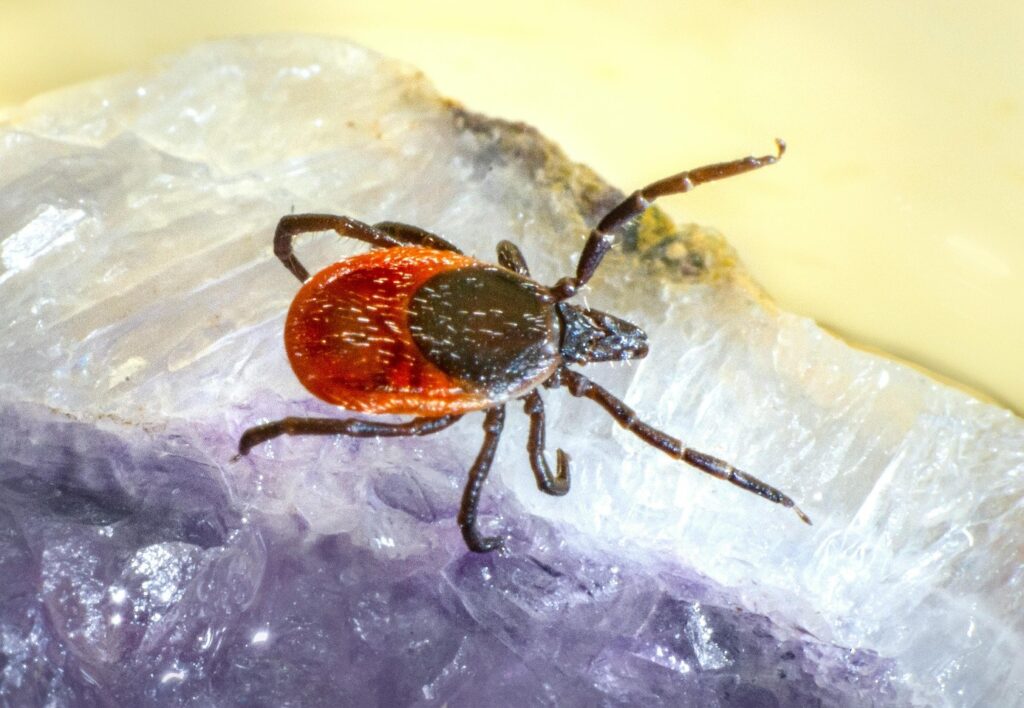
Why are ticks a problem?
When a tick bites, it introduces saliva into the skin. Through this saliva, diseases can be transmitted. The longer a tick remains attached, the greater the risk of infection.
In some cases, a high number of ticks can even lead to anemia. It is therefore important to remove a tick as quickly as possible.
Use a special tick tool or tick hook for this. Ensure that you remove the entire tick and not just the body, so that no parts remain in the skin.
How do you recognize a tick?
A tick is often visible as a small bump on the skin. They prefer warm and sheltered spots such as:
- Armpits
- Groin
- Around the head or ears
- Between the toes
The skin around the tick may be red or slightly irritated.
How do you check your pet?
Always check your pet after a walk through tall grass or wooded areas. It is best to check outdoor cats regularly.
Feel through the coat with your hands and look for small bumps. If you find a tick, remove it as quickly as possible using a special tick tool or tick hook.
Prevention and treatment
Fleas lay many eggs that end up in the environment. Consequently, a flea problem can be persistent. If your pet has fleas, not only the animal but also the environment must be treated.
Consider the following:
- Washing baskets and blankets
- Thoroughly cleaning favorite resting spots
- Treating the environment with a special spray
Various products are available for pets, such as spot-on treatments or tablets that protect against fleas and ticks.
Are you unsure?
Do you think your pet is suffering from fleas or ticks? Or would you like advice on the best protection?
Please feel free to contact us or visit the clinic. We are happy to help!