


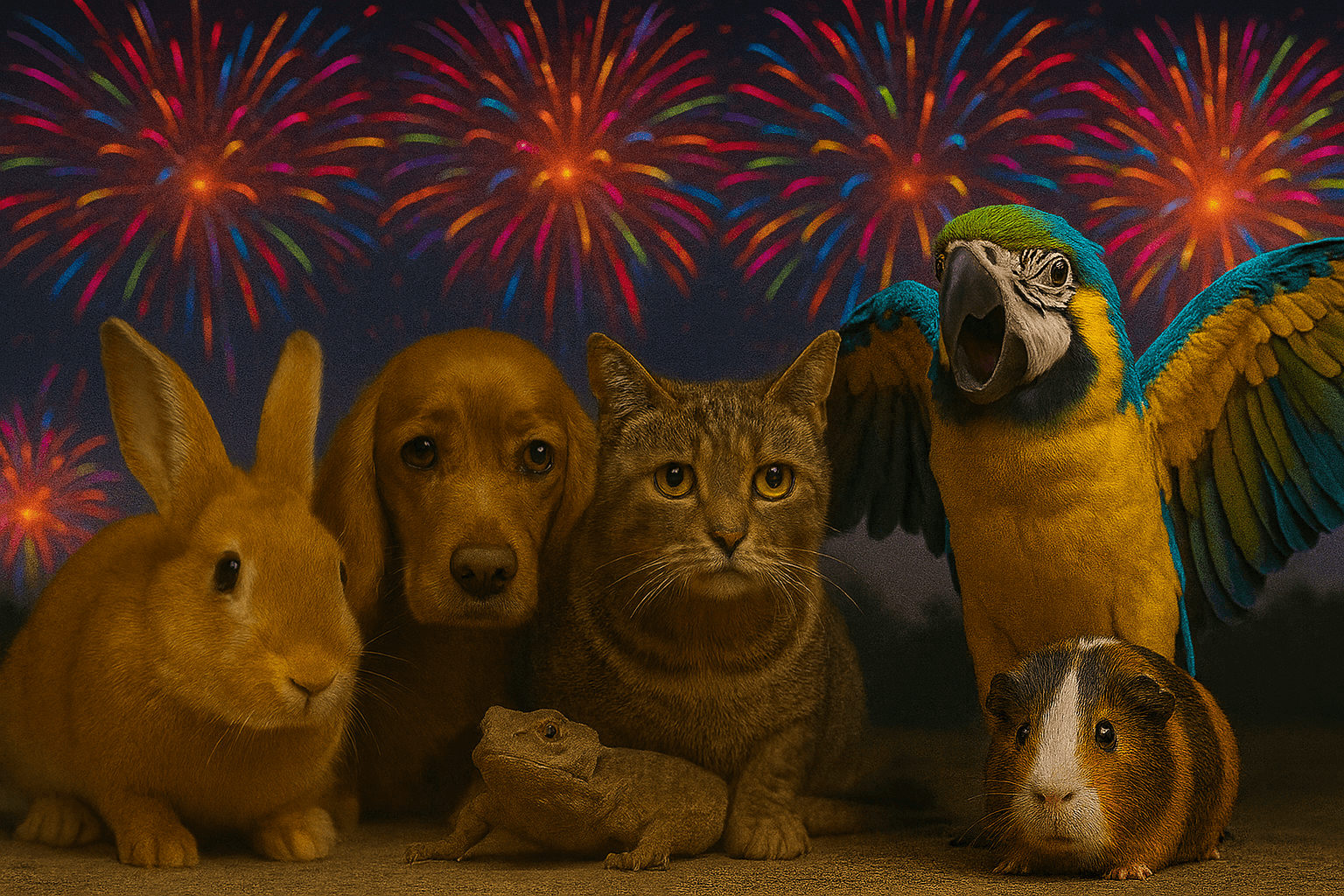
For many people, the month of December and the turn of the year belong to coziness, lights and being together. But for many pets, dogs, cats, rabbits, birds and other special animals, this period is a source of stress.
Noise, flashes, the smell of fire and unexpected bangs can trigger strong fear responses in animals. Fortunately, there are many things you can do to help your pet feel safer. In this blog, we explain where fireworks anxiety comes from, how to recognize it and what steps you can take, from training to medication.
Why are so many animals afraid of fireworks?
Animals often have much sharper senses than we do.
- Dogs and cats hear bangs at a much higher intensity.
- Rabbits and birds are prey animals and instinctively respond to loud noises.
- Birds may even start flying around in panic, with a chance of injury.
In addition, bangs are unpredictable; sounds, vibrations and flashes of light come suddenly and for no apparent reason. This makes it difficult for animals to understand whether they are safe.
How do you recognize fireworks anxiety?
Different animals show fear in different ways:
Dogs
- Trembling, panting, walking around restlessly
- Hiding or just being extremely affectionate
- Not wanting to eat
- Barking, squealing or whining
Cats
- Hiding in dark places
- Excessive washing
- Unwinding due to stress
- Tense body posture, large pupils
Rabbits
- Sitting silently and huddled together
- Not wanting to eat (dangerous → risk of gas belly or stagnant intestines)
- Stomping with hind legs
Birds
- Panicked flying back and forth
- Plucking feathers or injuring themselves
- Not unwinding at the sleeping place
Do you see this behavior? If so, chances are your animal could use support.
What can you do at home? (step 1: environmental modifications)
With a few simple adjustments, you can reduce a lot of stress:
Create a safe place
A quiet, sheltered space where your animal can retreat helps tremendously.
For example: bedroom, bathroom, crate with rug over it, or a separate room.
Close windows & curtains
This dampens both flashes of light and sound.
Turn on background noise
Soft music, a TV or white noise helps mask loud bangs.
Stay calm yourself
Animals mirror our emotions. Excessive comforting sometimes backfires, but radiating closeness and calmness does help.
In birds
- Cage in a quiet room
- Light dimming if necessary
- Keep them from flying around out of panic
Training: building self-confidence
This is a long-term solution and works best if you start it well before the New Year.
Sound desensitization
With special fireworks sound recordings, you can slowly get animals used to sounds. You start at a very low volume and build it up step by step.
Positive associations
Pairing short sounds with something nice (play, snacks, attention) can help animals feel more confident.
Consistent practice often produces great results, but it takes time, so preferably start in the fall.
And medication? Yes, but responsibly.
Some animals need more than just training and environmental modifications. If the anxiety is very high, temporary medication can help reduce stress and prevent dangerous behaviors (such as panic escape or injuring themselves).
Important: Not all remedies are safe. Some outdated drugs make animals drowsy but do not lower their anxiety, so they experience stress consciously but cannot react. We do not use these drugs in the veterinary clinic.
What types of support can we offer?
(Without brands or dosages – we always determine those based on the individual animal).
Short-term medication
For New Year’s Eve or acute anxiety. Helps reduce stress so your animal does not panic.
We choose only remedies that reduce anxiety, not remedies that “paralyze” an animal.
Long-acting anxiety inhibitors
In animals with severe fear of fireworks or animals that are restless for long periods throughout the December period.
Natural support or supplements
For mild to moderate anxiety, or as an adjunct to other remedies.
Always custom selected
We look at: type of animal, age, weight, health, previous experience and degree of anxiety.
What can you do beforehand at home if you are considering medication?
- Contact us on time (preferably early December or earlier).
- Don’t wait until Dec. 31; many resources work better if you start a few days beforehand.
When should you contact immediately?
- If your animal stops eating due to stress (especially rabbits!)
- In cases of extreme panic or self-injury
- If your animal had a previous bad reaction to fireworks
- When in doubt about whether medication is necessary
You’re not alone, we like to think with you about what’s best for your animal.
Together we make the New Year bearable for your special pet
With proper preparation, you can prevent a lot of anxiety and make New Year’s Eve a lot more enjoyable for your pet.
Want tailored advice, unsure about medication or want to make a plan for your animal?
Please feel free to contact us, we are happy to help.