


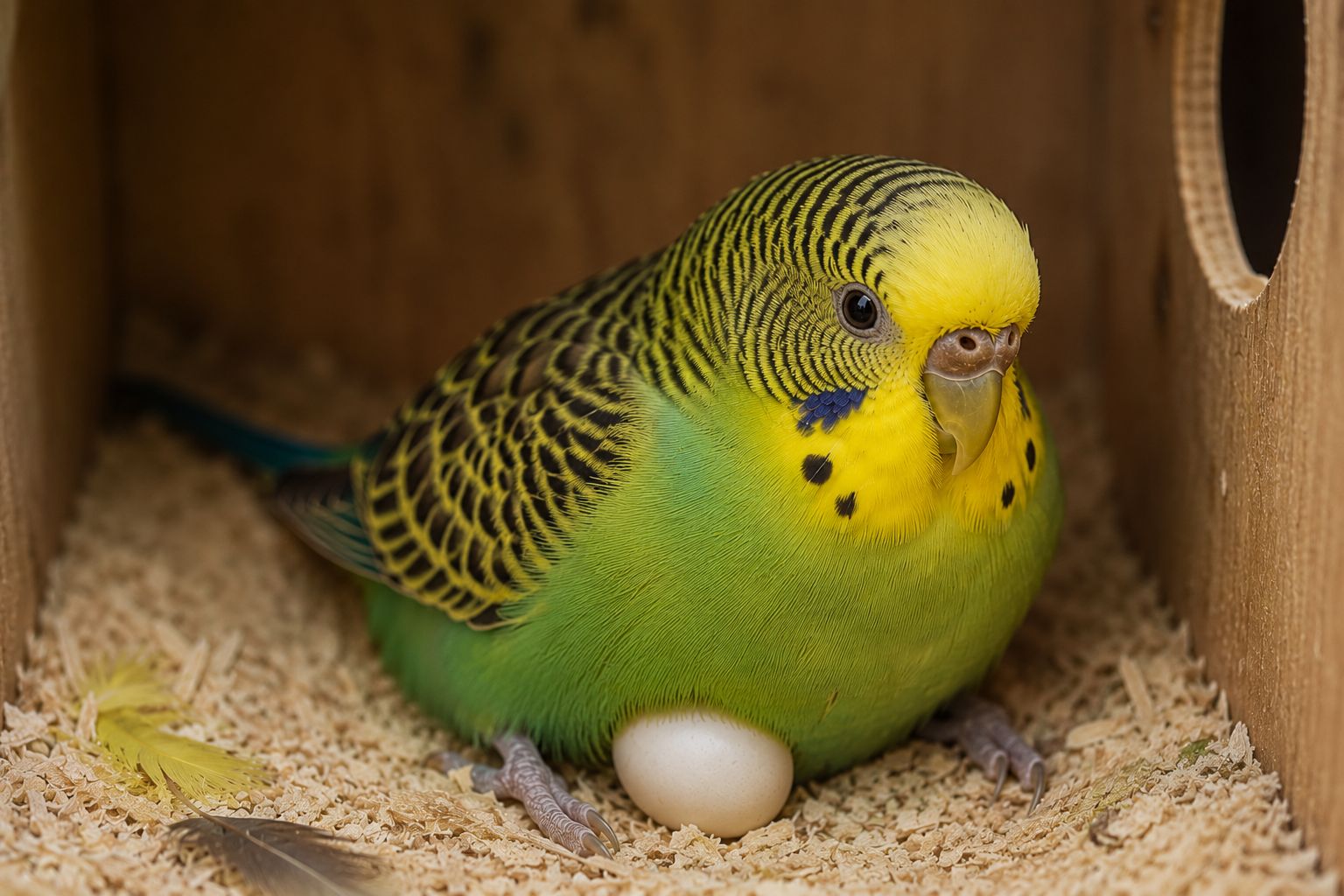
Everyone knows the saying: in May, all birds lay an egg. And indeed, for many birds, laying eggs is a normal part of spring. Due to longer daylight hours, hormonal changes, nesting behavior, and sometimes the presence of a partner or a suitable nesting site, a female bird can come into breeding condition.
But sometimes things go wrong. With egg binding, a bird is unable to lay an egg normally. The egg remains stuck in the oviduct or cloaca. This can quickly become serious, as birds often only show signs of illness at a late stage. Furthermore, a stuck egg can put pressure on organs, nerves, and airways.
When is egg-laying normal?
A healthy female can, depending on the species and circumstances, occasionally lay an egg. This can even happen without a male; in that case, the egg is unfertilized. While regular egg-laying is expected in chickens, parakeets, canaries, lovebirds, cockatiels, and other companion birds can also lay eggs.
Normally, your bird remains alert, eats well, breathes calmly, and the egg is produced without much difficulty.
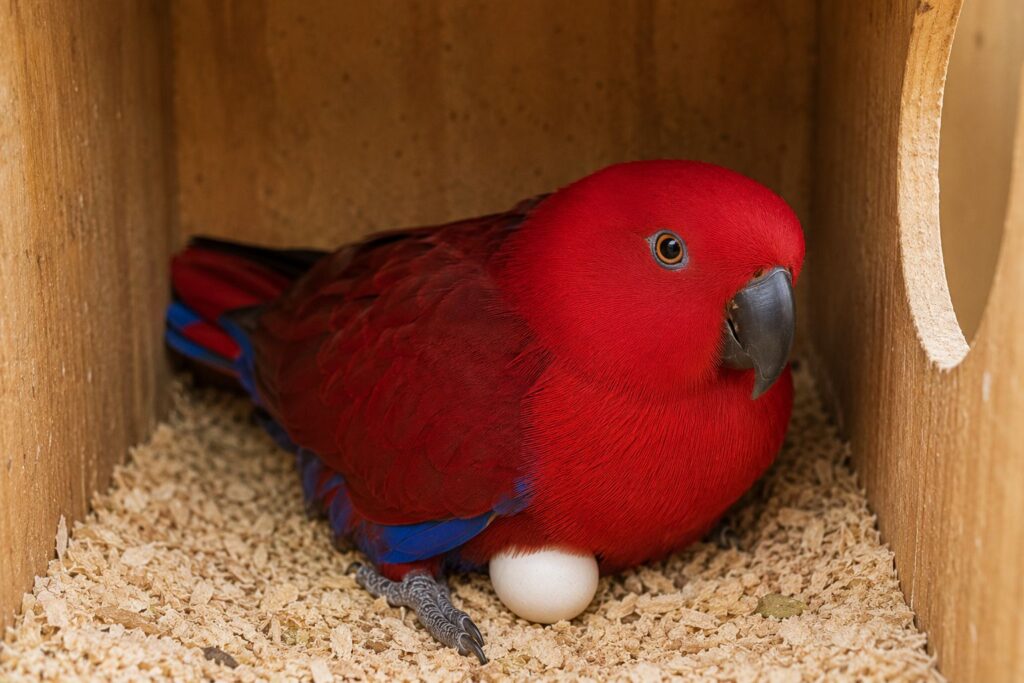
When does it become abnormal?
Laying eggs is not normal if your bird continues to strain, becomes lethargic, stops eating, becomes short of breath, or clearly appears to be in pain. Repeatedly laying eggs, soft-shelled or abnormal eggs, a swollen abdomen, or problems with droppings can also indicate a problem.
Risk factors for egg binding include:
- a calcium deficiency or unbalanced diet;
- obesity or lack of exercise;
- young or weakened birds;
- chronic egg-laying;
- abnormal, soft, or excessively large eggs;
- stress, illness, or issues with the oviduct.
Signs to watch for
Contact a veterinarian if you notice one or more of these symptoms:
- sitting fluffed up or lethargy;
- eating less or not at all;
- straining without an egg being produced;
- spending a lot of time on the bottom of the cage;
- standing with legs wide apart or having difficulty walking;
- a swollen abdomen or swelling around the cloaca;
- scant or abnormal droppings;
- blood in the droppings or around the cloaca;
- shortness of breath, tail bobbing, or breathing with an open beak;
- suddenly stopping laying when an egg is expected.
With birds, it is better to call once too often than not enough. A bird with egg binding can deteriorate rapidly.
When should you visit the veterinarian?
Egg binding is an emergency if your bird is lethargic, has difficulty breathing, sits on the bottom of the cage, continues to strain, or stops eating. Do not wait and do not attempt to massage the egg out yourself. Pressure or incorrect handling can cause the egg to break or damage the oviduct.
Ensure your bird remains warm, calm, and in a low-stress environment until you reach the veterinarian.
What can the veterinarian do?
The veterinarian will first assess how stable your bird is. Sometimes, the first step is not the immediate removal of the egg, but stabilizing the bird so that further diagnostics and treatment can be performed safely.
Possible examinations include:
- physical examination;
- careful examination of the abdomen and cloaca;
- X-rays to visualize the egg;
- blood tests, for example, to assess calcium levels and general condition.
Depending on the situation, treatment may consist of:
- heat support;
- fluid therapy;
- calcium administration;
- pain relief;
- support for oviduct contractions;
- careful removal of the egg (often under anesthesia);
- treatment of complications such as inflammation or infection;
- surgery in severe cases.
The required treatment depends on the bird species, the bird’s condition, and the position of the egg.
Can egg binding be prevented?
Not all cases can be prevented, but you can reduce the risk.
- Provide a complete, species-specific diet.
- Ensure adequate calcium and vitamin D (direct sunlight).
- Prevent obesity.
- Encourage daily exercise.
- Limit breeding triggers if your bird lays eggs continuously.
- Remove nesting material and nesting opportunities when they are not needed.
- Avoid excessive stroking of the back and the base of the tail.
- Ensure a healthy day and night rhythm.
- Discuss chronic egg-laying with your veterinarian in a timely manner.
For birds that repeatedly lay eggs, additional guidance or hormonal treatment may be necessary.
In conclusion
Laying an egg is a part of a bird’s life. However, if an egg does not come, it can become life-threatening. Do you notice your bird straining, becoming lethargic, or having difficulty breathing? If so, contact your veterinarian immediately.
Because in May, all birds lay an egg… but if the egg remains stuck, you want to act quickly.